Do what you do best and let technology do the rest
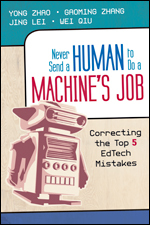 Technology has transformed our lives. Virtually every school and classroom is connected. Why then, has it not transformed education? Consider these five ways educators can begin to optimize classroom technology and rethink its use.
- See technology as a complement rather than a replacement
- Embrace its creation potential over consumption function
- Encourage design and personalized learning over standards and outcomes
- Celebrate the journey toward digital competence over curriculum improvement
- Focus on tech-pedagogy over product usage
Learn how to let technology cultivate student autonomy, creativity, and responsibility while focusing on lessons that hone higher-order and critical thinking skills.
Yong Zhao and his team have written a book that challenges the ideas not of how technology can make teaching better, but of how technology can create schools that are truly learner-centered. They focus not only on what technology could do better, but how the human element of schools is still needed now more than ever.”
“Dr. Yong Zhao continues to push educators’ thinking by taking a serious examination of the role technology has played (or hasn’t) in education in the last 30 years. The struggles he lays out are those that many are trying to overcome on an almost daily bases. The new thinking in this book needs to be read by those in the classroom and leaders alike.”
“This book masterfully address the issues related to technology integration in schools. Dr. Zhao artfully navigates through the misconception of technology as the ultimate solution to the challenges of teaching. The book provides useful examples of the successful marriage good instruction and good technology can have when properly balanced.”
“In the final chapter, Zhao shines a spotlight on the need to leverage the voice of the STUDENTS (#stuvoice) in our classrooms as an asset to our own evolving connected capacities as adults. The development of social media in today’s world is constant, and each day our students bring with them rich cultures and talents into our classrooms. Zhao identifies this ripe space for innovation to be infused, but a culture shift is necessary on the part of adults. It’s not about the tools but the people. Students need to be empowered and teachers (and especially school leaders) need to relinquish some control. We can breed innovation or stifle innovation here.”
“Never Send a Human to Do A Machine’s Job is simultaneously an historical look at the myriad disappointments of technology in education over the past few decades and a vision for a future of a more personalized and product-filled educational experience. The vision provided in the book is realistic, well researched, and highly relevant to the needs of today’s learner. It is time to totally reimagine education. Are you ready?”

 Learning in the Age of AI
Leave a reply to Diigo Links (weekly) | Mr. Gonzalez's Classroom Cancel reply