Introduction
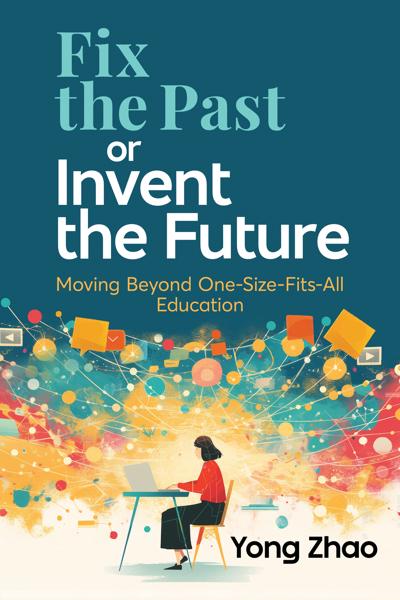
Order the book from ASCD or Amazon.
For years, the pervasive story of American education was one of decline. In 1995, educational psychologists David Berliner and Bruce Biddle published a book entitled, The Manufactured Crisis: Myths, Fraud, and the Attack on America’s Public Schools (Berliner & Biddle, 1995). This book offered convincing evidence and excellent analyses to show that America’s educational crisis was manufactured to advance certain political and economic agendas. This book fundamentally changed my thinking about data and education, but it did not seem to have convinced the country. Allegations of a crisis reappear whenever news stories about standardized test scores surface.
Most recently, in January 2025, a few points drop in the 2024 National Assessment of Educational Progress (NAEP) reading scores, led to headlines such as “Reading Scores Fall to New Low on NAEP” in Education Week (Schwartz, 2025) and “American Children’s Reading Skills Reach New Lows” in the New York Times (Goldstein, 2025). Over the years, the release of international assessments results such as the Programme for International Students Assessment (PISA) and the Trends in International Mathematics and Science Studies (TIMSS) has always driven American media and government officials to declare that American education is in crisis or further decline.
Whether American education is in crisis is a ceaseless debate. Always being in “crisis” might force you to take action to get out of the crisis. But obviously, what action matters. Actions could be working on improving the system or solving problems from the past — or ditching the past and inventing the future.
In 1898, the first international congress on urban planning was held in New York and the primary problem was horse manure that were overwhelming big cities such as Paris and New York. Numerous horses were used at the time to transport people and goods. More 170,000 horses were in use in New York city around 1900, for example. With a horse producing between 10 and 15 kilograms of manure a day, New York City dealt with one to two million kilos of horse poop each day (Durango, 2019). The problem was massive and a solution was elusive. The conference ended seven days earlier than planned.
The solution came years later as automobiles began to replace horses. Who would have thought at the time that automobiles would solve an environmental and health problem only to become an environmental and health problem a half century later. But that’s another story. The lesson from the horse manure problem is that some unsolvable problems cannot be fixed until a new paradigm emerges.
The perception that American education is experiencing a “crisis” has been primarily driven by the lack of significant improvement in test scores and international comparisons in three subjects, reading, math and science. Test scores in reading and math have not improved significantly since the 1970s, according to NAEP. International comparisons show American students have never ranked at the top since the 1960s. A Nation at Risk was published in 1983 (National Commission on Excellence in Education, 1983). After so many years of changes, reforms, and innovations, America’s test scores remain the same. Isn’t it time to forget about fixing what we have inherited from the past with incremental improvements?
This book is about inventing a new future. Today’s society is radically different from 50 years ago. Today’s technology is radiaclly different from 50 years ago. Today’s children are radically different from 50 years ago. Today’s world is radically different from 50 years ago. We can no longer be stuck in a past that no longer serves all our children. We can create a better future with what we have today.
This book has two parts. The first part attempts to bring evidence to show the fundamental problems of the past or current educational paradigm: a one-size-fits-all mentality. To illustrate the point, I chose several ideas popular in educational practices to show how any intervention, no matter how powerful, does not work for all students all the time. Educational studies have been trying to become more like a hard science for a long time because it has had a poor reputation as an elusive science (Lagemann, 2002). Since the 1990s, randomized controlled trials and quantitative methods have been favored in educational research. Whenever possible, randomized controlled trials have been conducted and effect sizes analyzed. But as I point out in Chapter 1, effect sizes mask the potential danger to individual students.
Furthermore, meta-analyses have become extremely popular with researchers. Academic journals favor these studies as they aggregate findings from numerous studies into “hard numbers.” Policy makers and education leaders seem to be easily convinced with these numbers. There are even meta-analyses of meta-analyses. However, these studies are in many ways “pseudo-science with real data” (Bergeron, 2017). Averaging the averages from multiple students largely ignores the individual students in individual classrooms taught by individual teachers in individual schools located in individual communities. The findings can hardly apply to the individual students teachers face each day.
Chapters 2 and 3 provide more examples of why any one educational intervention does not apply to all students. Popular concepts like “growth mindset” may work for some students in some contexts, but if applied blindly, it can be foolish. Sometimes, students need to learn when to quit. Another popular idea, social-emotional learning (SEL), has a similar problem. Incidentally, meta-analyses of the effects of employing both concepts in schools provide inconclusive evidence that they work for all students.
In Chapter 4, I take a slightly different angle. I focus on time and educational outcomes. Education interventions that seem to be effective in the short-term can have long-term consequences. Some methods that produce excellent results can be unproductive successes because they hurt the development of long-term outcomes such as creativity, curiosity, and transfer.
In Chapter 5, I discuss the potential of AI for education. Under the current educational paradigm, AI can be useful for teachers and students, but its potentials cannot be truly realized unless the paradigm shifts. Teachers and students can use AI to help them learn what they are learning better, but is what they are required to teach and learn what’s needed today and in the future? In this chapter, I argue that prescribed curriculum constraints the power of AI. Instead, AI should be used to support personalization of learning and finding and solving problems by students.
In Chapter 6, I describe a new educational paradigm focused on reexamining the popular proposal to personalize learning. After critiquing the traditional definition of personalized learning, I offer a new definition, which argues that true personalization has to be done by students instead of for students. To do so requires relaxation of the prescribed curriculum and changes in teachers’ roles.
In Chapter 7, I discuss another element of the new paradigm of education. I argue that in the age of AI, the ability to find questions and problems has become one of the most needed skills. But traditional schools do not teach students to find meaningful questions or significant problems because they teach known answers to known problems. To help students develop this skill, all teaching should be changed to start with encouraging students to find and refine genuine problems and questions, not those that are pre-packaged.
In Chapter 8, I continue the discussion of a new educational paradigm with a focus on human interdependence and global competence. Through personalization of learning and finding and solving problems, we help students develop the mindset of human interdependence, which means that we all develop our own unique interests and talents and use that to find and solve problems for others and the world. Such human interdependence goes beyond classrooms and schools to become the foundation of global competence.
In Chapter 9, I offer ideas about how to make the paradigm shift. With several examples, I attempt to show that everyone in education, students, teachers, and school leaders, can make transformative changes. Although these changes may not last, they do benefit the individuals involved. Further, I argue that government-driven changes are often about strengthening the existing paradigm and are not effective in making education better for all. Therefore, transformative changes should be made by individuals from the bottom instead of imposed from the top.
Chapter 10 is a summary of the elements that constitute a new paradigm of education: personalization of learning, finding and solving problems, and human interdependence. I then discuss the potential challenges and propose a new approach to shift the education paradigm: teachers as inventors, students as partners, and school leaders as enablers.
Overall, I hope this book can inspire educators, students, parents, policy makers, and education researchers to rethink education in the Age of AI, to reimagine the possibilities of education with AI, and to take actions to shift the paradigm of education.
References:
Bergeron, P.-J. (2017). How to Engage in Pseudoscience With Real Data: A Criticism of John Hattie’s Arguments in Visible Learning From the Perspective of a Statistician. McGill Journal of Education/Revue des sciences de l’éducation de McGill, 52(1), 237-246. http://mje.mcgill.ca/article/view/9475/7229
Berliner, D. C., & Biddle, B. J. (1995). The manufactured crisis : myths, fraud, and the attack on America’s public schools. Addison-Wesley.
Durango, Á. G. d. (2019, June 9). New York, manure and stairs: when horses were the cities’ nightmares. Retrieved Jan 30 from https://smartwatermagazine.com/blogs/agueda-garcia-de-durango/new-york-manure-and-stairs-when-horses-were-cities-nightmares?utm_source=chatgpt.com
Goldstein, D. (2025, Jan 29). American Children’s Reading Skills Reach New Lows. Retrieved Jan 30 from https://www.nytimes.com/2025/01/29/us/reading-skills-naep.html
Lagemann, E. C. (2002). An elusive science: The troubling history of education research. University of Chicago Press.
National Commission on Excellence in Education. (1983). A Nation at Risk: The Imperative for Educational Reform. http://www.ed.gov/pubs/NatAtRisk/index.html
Schwartz, S. (2025, January 29). Reading Scores Fall to New Low on NAEP, Fueled by Declines for Struggling Students. Retrieved Jan 29 from https://www.edweek.org/leadership/reading-scores-fall-to-new-low-on-naep-fueled-by-declines-for-struggling-students/2025/01

 Learning in the Age of AI